

The scene is standard. It’s a Friday night rush in a converted warehouse in Logan Square, or maybe a high-volume bistro in River North. The ticket rail is full. In the back corner, a garde manger cook works silently, head down, slicing radishes on a mandoline. Their body is still. Their focus is absolute. The only movement is the rhythmic slide of the vegetable against the blade.

Then, the lights go out.
For a split second, the kitchen is pitch black. The cook freezes, blade mid-stroke. The panic isn’t about the darkness itself. It’s about what happens next: the “Waving Man” dance. The cook has to stop, step back from the station, and frantically wave their arms at a small plastic sensor mounted on the ceiling, hoping it notices them. It’s a humiliating ritual. It breaks the flow of service. And in a kitchen full of 10-inch chef’s knives and hot oil, it is a liability masquerading as energy efficiency.
We know the feeling from public restrooms—waving at a sensor just to finish washing our hands. But in a commercial kitchen, that timeout isn’t just awkward; it’s a workman’s comp claim waiting to happen. When a sensor fails to see a cook, it’s usually not broken. It is doing exactly what it was designed to do for an office hallway, applied wrongly to a zone of high-intensity, low-movement labor.
The Physics of Failure: Why PIR Can’t See “Mise-en-Place”
The standard motion sensor found in 90% of commercial builds is a Passive Infrared (PIR) unit. To see why they fail, look at how they see the world. A PIR sensor doesn’t actually “see” you; it detects heat differentials moving across a segmented lens, dividing the room into invisible pie slices. To trigger the lights, a heat source (a human body) must cross from one slice to another.
This works perfectly for a waiter walking down a hallway or a dishwasher hauling racks. They are large heat signatures moving rapidly across multiple zones. But consider the prep cook. When someone is deep in mise-en-place, they stand in a single 2-foot square for 45 minutes. They lean forward over a cutting board. The only things moving are their hands and forearms.
To a standard Leviton ODS10 or similar wall-switch sensor, that cook is invisible. The sensor registers the room as empty because the heat signature isn’t crossing any zonal lines. The timer counts down—5 minutes, 10 minutes—and then cuts the power. The cook is still there, still warm, still working, but mechanically indistinguishable from a stack of warm sheet pans.
You can’t solve this by cranking the timeout delay to 30 minutes. That defeats the energy code requirements that forced the sensor installation in the first place. Time isn’t the issue. The technology is. PIR is fundamentally the wrong tool for detecting fine motor skills.
The Hardware Solution: Ultrasonics and Dual-Tech
If PIR is the problem, “Dual-Technology” is the non-negotiable solution for back-of-house production zones. Experienced facility directors and consultants stopped speculating on this years ago.
Dual-Tech sensors combine standard PIR with an Ultrasonic emitter. While PIR waits for heat to move, the Ultrasonic component actively fills the room with high-frequency sound waves (usually between 32kHz and 45kHz). These waves bounce off every surface—the stainless steel tables, the tile walls, the stacks of Cambros—and return to the sensor.
Get Inspired by Rayzeek Motion Sensor Portfolios.
Doesn't find what you want? Don't worry. There are always alternate ways to solve your problems. Maybe one of our portfolios can help.
This is the Doppler shift principle in action. If a cook stands perfectly still but chops an onion, the motion of the knife and the slight shift of their torso disrupts the sound wave pattern. The sensor “hears” the movement even if it can’t “see” the heat shift. It knows the room is occupied.
In a busy kitchen, this distinction is critical. We often see operators try to patch this problem by installing intense under-cabinet task lighting. While high-CRI LED tape light under a shelf is excellent for inspecting the grain of fish or the quality of produce, think of it as a backup, never a fix. If the overheads die, the task light keeps the knife safe, but the sudden drop in ambient light still creates a dangerous strobe effect and panic. The main room sensors must be robust enough to stay on.
Looking For Motion-Activated Energy-Saving Solutions?
Contact us for complete PIR motion sensors, motion-activated energy-saving products, motion sensor switches, and Occupancy/Vacancy commercial solutions.
For any prep area, dish pit, or production line, the spec sheet must read “Dual-Technology” (like the Wattstopper DT-300 series or equivalent). If the bid comes back with standard PIR to save $40 per unit, send it back. The cost of one sliced thumb pays for the upgrade across the entire restaurant.
Geometry is the Enemy: The “Shadow Walk”
Even a Dual-Tech sensor can fail if it is blinded by the geometry of a commercial kitchen. Kitchens are hostile environments for optics. They are dense with vertical obstructions: Metro wire shelving, hanging pot racks, Ansul fire suppression drops, and stacked inventory.

When evaluating a lighting plan, we perform a “Shadow Walk.” This involves standing exactly where the cook will stand, assuming the “prep posture” (leaning forward 15 degrees), and looking back at the proposed sensor location. If the view is blocked by a shelf, a column, or the swing of a walk-in door, the sensor will fail.
It is common to see sensors mounted near the entryway door. This is convenient for the electrician but useless for the cook working in the back corner behind the convection ovens. Ultrasonic waves can bend around corners to some degree, but they cannot penetrate solid stainless steel. The sensor needs to be centrally located, ceiling-mounted, and spaced so that its detection cone covers the “quiet” zones, not just the traffic lanes.
The “Code” Excuse (and the Safety Exception)
The most common pushback from architects and general contractors is, “We have to use these aggressive settings to pass Title 24” (or ASHRAE 90.1, or local energy codes). They aren’t lying—energy codes are stricter than ever—but they often miss the fine print.
Almost every major energy code includes an exception clause for occupant safety or “process loads.” If a lighting control system creates a hazard—like plunging a knife-wielding employee into darkness—it violates OSHA standards. Safety trumps energy savings.
The code usually allows for “Manual-On” settings (Vacancy sensors) rather than “Auto-On” (Occupancy sensors), and crucially, it allows for manual overrides in areas where safety is a concern. The trick is knowing where to look in the local AHJ (Authority Having Jurisdiction) regulations. It varies wildly from California to Texas to NYC, but the principle remains: safety is a valid reason to request a variance or a specific control setup.
This becomes even more critical in walk-in coolers and freezers. If a dark prep room is dangerous, a dark freezer at -10°F is a nightmare. We see frequent reports of delivery drivers or inventory managers getting “trapped” in the dark because the motion sensor inside the walk-in didn’t detect them counting boxes behind a pallet. In these environments, mechanical timers (the old-school dial type) or pilot-light switches often beat smart sensors simply because they don’t freeze and they don’t guess.
Maybe You Are Interested In

- Ceiling-mounted PIR occupancy sensor with dry-contact relay output
- 12/24VDC or 12/24VAC low-voltage supply
- COM, NO, and NC isolated relay contacts for EMS, HVAC, and building control inputs

- Low-voltage DC recessed ceiling-mounted microwave motion sensor switch
- 12 VDC / 24 VDC input with 10-30 VDC range
- 10A max work current with adjustable time delay, Lux threshold, and sensitivity
- Higher-load recessed ceiling-mounted microwave motion sensor switch
- 100-265 VAC line-voltage input, 10A model
- 5.8 GHz microwave sensing with adjustable time delay, Lux threshold, and sensitivity
- Recessed ceiling-mounted microwave motion sensor switch
- 100-265 VAC line-voltage input, 5A model
- 5.8 GHz microwave sensing with adjustable time delay, Lux threshold, and sensitivity
- Ceiling-mounted RZ037 PIR occupancy sensor dimmer for 220V power
- 3A maximum working current with 660W rated load
- LUX button controls light-sensor ON/OFF and user-set dimming brightness
- Ceiling-mounted RZ037 PIR occupancy sensor dimmer for 110V power
- 3A maximum working current with 330W rated load
- LUX button controls light-sensor ON/OFF and user-set dimming brightness

- Low-voltage DC ceiling-mounted microwave motion sensor switch
- 12 VDC / 24 VDC input with 10-30 VDC range
- 10A max work current with adjustable time delay, Lux threshold, and sensitivity
- Higher-load ceiling-mounted microwave motion sensor switch
- 100-265 VAC line-voltage input, 10A model
- 5.8 GHz microwave sensing with adjustable time delay, Lux threshold, and sensitivity
- Ceiling-mounted microwave motion sensor switch
- 100-265 VAC line-voltage input, 5A model
- 5.8 GHz microwave sensing with adjustable time delay, Lux threshold, and sensitivity

- Low-voltage DC recessed ceiling mount PIR motion sensor switch
- 12 VDC / 24 VDC input with 10-30 VDC range
- Max work current 10A with adjustable time delay, Lux threshold, and sensitivity

- Higher-load recessed ceiling mount PIR motion sensor switch
- 100-265 VAC line-voltage input, 10A model
- 360-degree detection with adjustable time delay, Lux threshold, and sensitivity
- Recessed ceiling mount PIR motion sensor switch
- 100-265 VAC line-voltage input, 5A model
- 360-degree detection with adjustable time delay, Lux threshold, and sensitivity

- Wireless switch and receiver kit for indoor ON/OFF lighting control
- 100-230VAC, 50/60Hz receiver with 5A rated current
- CR2032-powered wireless switch with 2.4GHz communication
- Occupancy (Auto-ON/Auto-OFF)
- 12–24V DC (10–30VDC), up to 10A
- 360° coverage, 8–12 m diameter
- Time delay 15 s–30 min
- Light sensor Off/15/25/35 Lux
- High/Low sensitivity
- Auto-ON/Auto-OFF occupancy mode
- 100–265V AC, 10A (neutral required)
- 360° coverage; 8–12 m detection diameter
- Time delay 15 s–30 min; Lux OFF/15/25/35; Sensitivity High/Low
- Auto-ON/Auto-OFF occupancy mode
- 100–265V AC, 5A (neutral required)
- 360° coverage; 8–12 m detection diameter
- Time delay 15 s–30 min; Lux OFF/15/25/35; Sensitivity High/Low

- 100V-230VAC
- Transmission Distance: up to 20m
- Wireless motion sensor
- Hardwired control
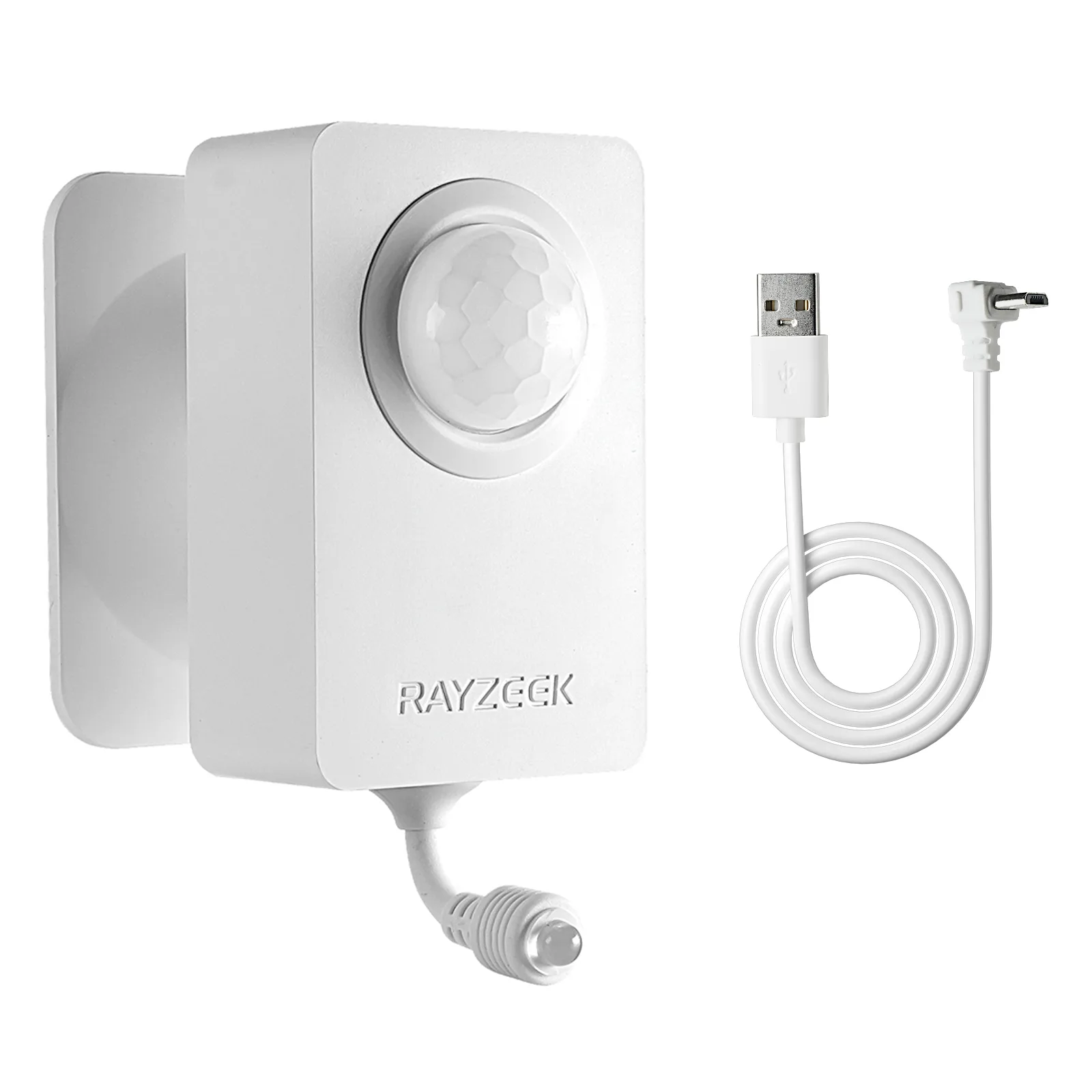
- Voltage: 2x AAA Batteries / 5V DC (Micro USB)
- Day/Night Mode
- Time delay: 15min, 30min, 1h(default), 2h
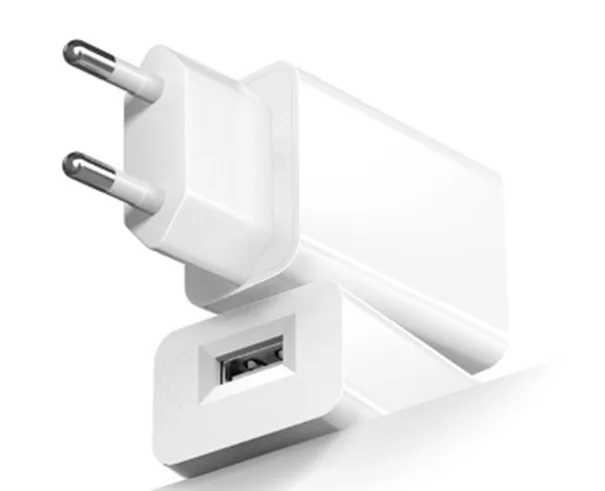
- EU plug power adapter
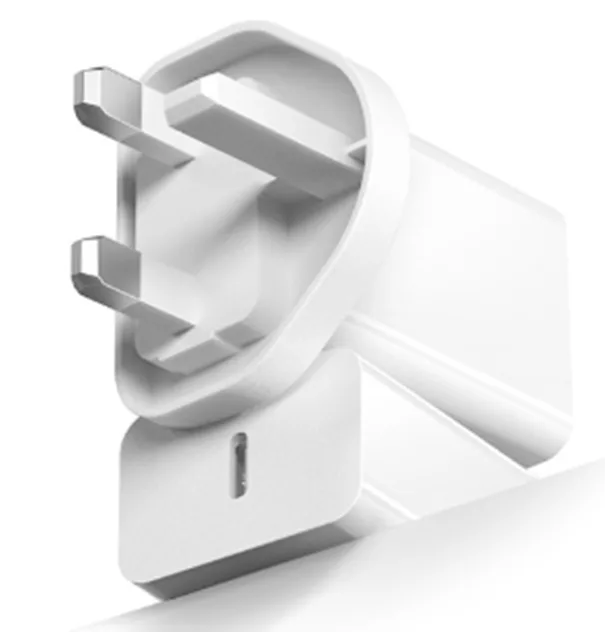
- UK plug power adapter
Red Team: The Wireless Trap
One warning on the “Smart Kitchen” trend. We see a push toward wireless lighting controls (Zigbee, Bluetooth Mesh) to save on copper wiring costs during build-out. In a residential home, these are fine. In a commercial kitchen, they are often a disaster.
Commercial kitchens are Faraday cages. They are lined with stainless steel sheets, filled with microwave radiation, and humming with heavy inductive loads from mixers and compressors. This interference shreds low-power wireless signals. Furthermore, grease vapor kills delicate electronics. A wireless sensor battery dying in the middle of a shift results in a bypassed system that stays on 24/7, defeating the purpose entirely. Stick to hardwired, line-voltage sensors. Copper doesn’t care about interference.
Final Systems Check
The “quiet cook” problem is solvable, but not if you treat lighting as a utility bill line item rather than a workflow tool. The goal is a kitchen that works when the weeds hit, not just one that looks good on a blueprint.
Go walk your line during prep time. Watch the sensors. If you see a cook wave their arm, you have a problem. Check the model number on the wall switch. If it doesn’t say “Dual-Tech” or “Ultrasonic,” you know what to put on the next maintenance order.


