

A fitting room is a small box with a curtain, a mirror, and someone trying to decide if they like themselves in a piece of clothing. That’s already enough pressure. When the lights cut out mid-change, the reaction isn’t “energy management happened.” The reaction is embarrassment, anger, and a staff escalation that lands on a store manager’s desk on a Saturday.
That scene has played out in real tenant spaces. In a Fall 2018 mall build-out in Columbia, Maryland, ceiling PIR sensors paired with a short vacancy delay (around two minutes) created exactly that: customers reporting the room “flickering off” while they were changing, a manager framing it as a safety and dignity issue, and loss-prevention worrying about the kind of complaint that doesn’t stay small. The fastest fix that day wasn’t new fixtures. It was making the behavior predictable: lengthen the delay into a more humane band, adjust sensitivity one notch, and make sure there was a clear manual control inside the room so a customer didn’t have to perform for a sensor behind a curtain.
There’s a second scene that looks like the opposite problem. A fitting room light that never turns off after a single visit doesn’t feel like dignity; it feels like waste, landlord emails, and after-hours security calls. Both scenes usually stem from the same root error: treating a cramped, mirrored micro-space like a generic office.
Two Failure Modes, One System
Most teams treat fitting-room problems as two different mysteries: nuisance-off (goes dark too fast) versus stuck-on (never times out). In practice, they are coupled. One team cranks the delay down to hit a runtime target and triggers complaints. Another team cranks sensitivity up to stop complaints and creates lights that stay on forever. Then everyone starts swapping devices as if a different brand will make geometry disappear.
A cleaner way to think about it is operational: what triggers the light on, what keeps it “occupied,” and what condition lets it release into timeout. In fitting rooms, “trigger” is rarely the issue. “Hold” and “release” are where the room’s door undercut, curtain gaps, mirror layout, and HVAC behavior quietly dominate.
A common stuck-on case often isn’t a defective sensor at all. In a Northern Virginia strip center in Summer 2019, a fitting room sensor kept resetting because corridor traffic was essentially constant—someone walking by every 10–20 seconds—and the door had a deep undercut with visible daylight. The assistant manager wanted a new sensor. A crude experiment—temporarily blocking the undercut with cardboard—made the light finally time out. That is the fitting-room version of a lab result: if the timer never reaches “vacant,” it may be because the room never actually looks vacant to the device.
Solving this requires a sequence, not just a debate over placement versus settings. Placement and coverage to prevent false holds come first. Settings that respect stillness come second. A technology swap comes last, after cheap experiments prove what mechanism is actually breaking the room.
Mechanism Trace: Trigger → Hold → Release (In a Fitting Room, Not a Classroom)
Think of the system in three verbs.
Trigger is the obvious part: door opens, person steps in, motion is detected, light turns on. In many retail build-outs, this works on day one and everyone signs off. That’s why the room survives punch but fails on Saturday. The acceptance test was too shallow.
Maybe You Are Interested In

- Ceiling-mounted PIR occupancy sensor with dry-contact relay output
- 12/24VDC or 12/24VAC low-voltage supply
- COM, NO, and NC isolated relay contacts for EMS, HVAC, and building control inputs

- Low-voltage DC recessed ceiling-mounted microwave motion sensor switch
- 12 VDC / 24 VDC input with 10-30 VDC range
- 10A max work current with adjustable time delay, Lux threshold, and sensitivity
- Higher-load recessed ceiling-mounted microwave motion sensor switch
- 100-265 VAC line-voltage input, 10A model
- 5.8 GHz microwave sensing with adjustable time delay, Lux threshold, and sensitivity
- Recessed ceiling-mounted microwave motion sensor switch
- 100-265 VAC line-voltage input, 5A model
- 5.8 GHz microwave sensing with adjustable time delay, Lux threshold, and sensitivity
- Ceiling-mounted RZ037 PIR occupancy sensor dimmer for 220V power
- 3A maximum working current with 660W rated load
- LUX button controls light-sensor ON/OFF and user-set dimming brightness
- Ceiling-mounted RZ037 PIR occupancy sensor dimmer for 110V power
- 3A maximum working current with 330W rated load
- LUX button controls light-sensor ON/OFF and user-set dimming brightness

- Low-voltage DC ceiling-mounted microwave motion sensor switch
- 12 VDC / 24 VDC input with 10-30 VDC range
- 10A max work current with adjustable time delay, Lux threshold, and sensitivity
- Higher-load ceiling-mounted microwave motion sensor switch
- 100-265 VAC line-voltage input, 10A model
- 5.8 GHz microwave sensing with adjustable time delay, Lux threshold, and sensitivity
- Ceiling-mounted microwave motion sensor switch
- 100-265 VAC line-voltage input, 5A model
- 5.8 GHz microwave sensing with adjustable time delay, Lux threshold, and sensitivity

- Low-voltage DC recessed ceiling mount PIR motion sensor switch
- 12 VDC / 24 VDC input with 10-30 VDC range
- Max work current 10A with adjustable time delay, Lux threshold, and sensitivity

- Higher-load recessed ceiling mount PIR motion sensor switch
- 100-265 VAC line-voltage input, 10A model
- 360-degree detection with adjustable time delay, Lux threshold, and sensitivity
- Recessed ceiling mount PIR motion sensor switch
- 100-265 VAC line-voltage input, 5A model
- 360-degree detection with adjustable time delay, Lux threshold, and sensitivity

- Wireless switch and receiver kit for indoor ON/OFF lighting control
- 100-230VAC, 50/60Hz receiver with 5A rated current
- CR2032-powered wireless switch with 2.4GHz communication
- Occupancy (Auto-ON/Auto-OFF)
- 12–24V DC (10–30VDC), up to 10A
- 360° coverage, 8–12 m diameter
- Time delay 15 s–30 min
- Light sensor Off/15/25/35 Lux
- High/Low sensitivity
- Auto-ON/Auto-OFF occupancy mode
- 100–265V AC, 10A (neutral required)
- 360° coverage; 8–12 m detection diameter
- Time delay 15 s–30 min; Lux OFF/15/25/35; Sensitivity High/Low
- Auto-ON/Auto-OFF occupancy mode
- 100–265V AC, 5A (neutral required)
- 360° coverage; 8–12 m detection diameter
- Time delay 15 s–30 min; Lux OFF/15/25/35; Sensitivity High/Low

- 100V-230VAC
- Transmission Distance: up to 20m
- Wireless motion sensor
- Hardwired control
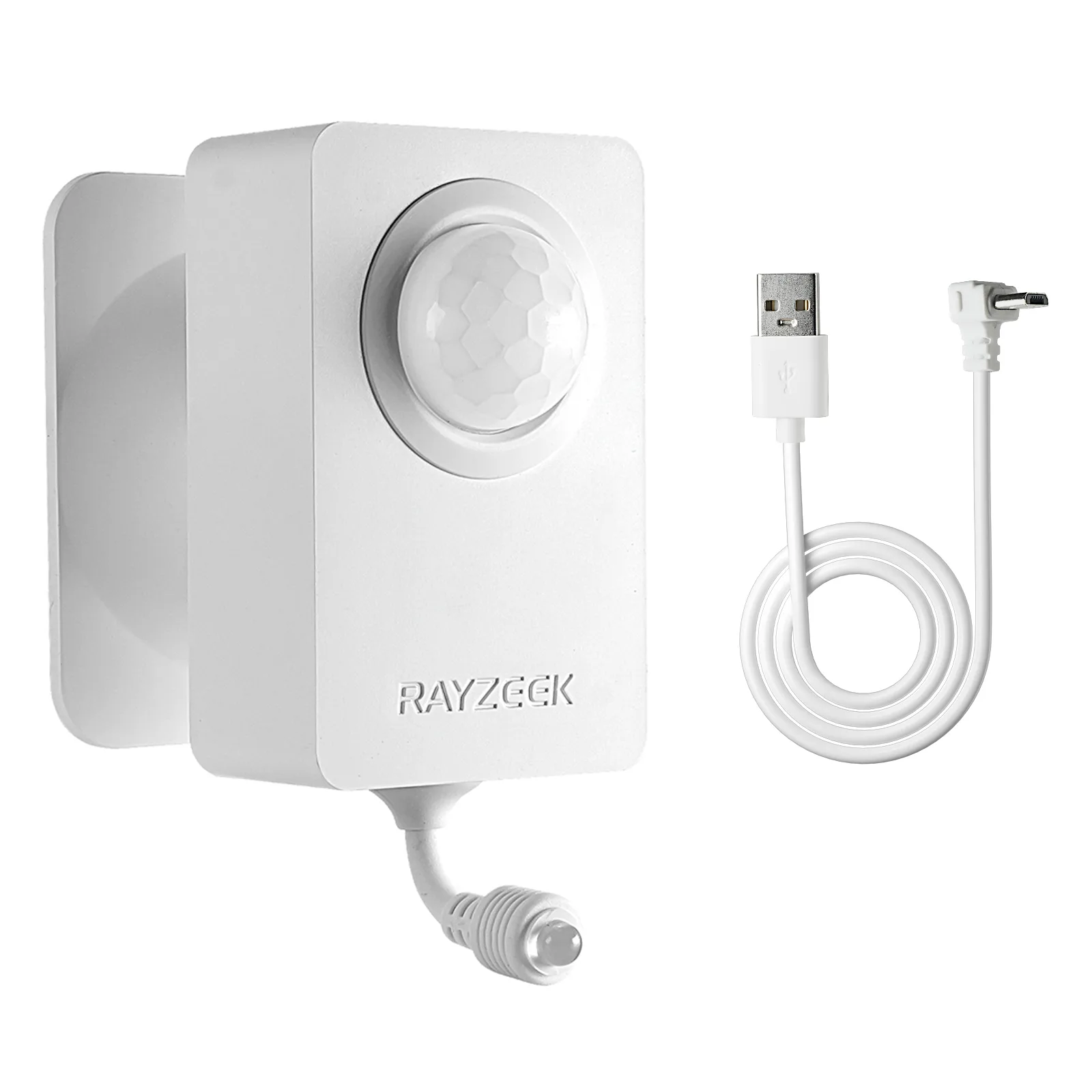
- Voltage: 2x AAA Batteries / 5V DC (Micro USB)
- Day/Night Mode
- Time delay: 15min, 30min, 1h(default), 2h
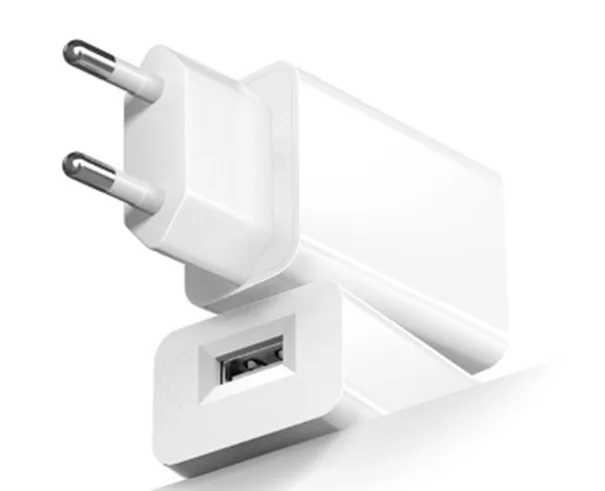
- EU plug power adapter
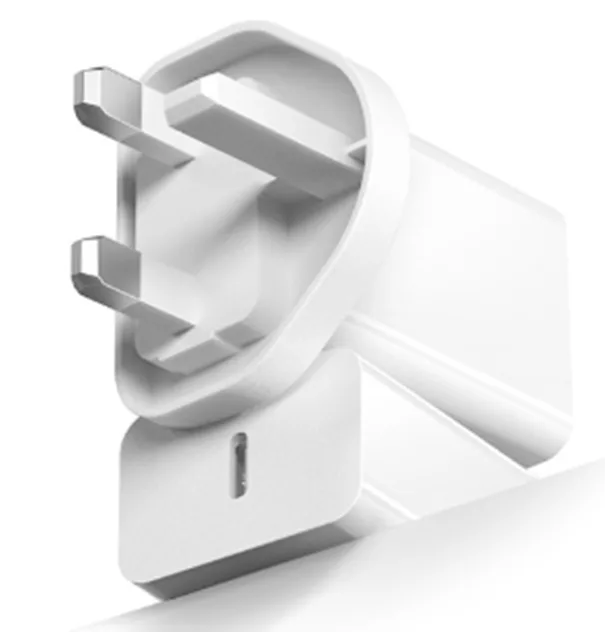
- UK plug power adapter
Hold causes 80% of the arguments. What keeps the sensor convinced the room is occupied? In fitting rooms, the “hold” can be real motion inside the room, but it is just as often motion outside the room seen through a door crack, louver, or curtain gap. It can also be the environment: a supply register aimed across the sensor’s field, or a lightweight curtain fluttering on heating cycles, creating the kind of disturbance that prevents the sensor from ever seeing stable vacancy.
Release is the condition the sensor needs to see to time out. In a well-behaved room, release is simple: door closes, there is no motion in the room, and there is no hallway motion leaking into the sensor’s view. In a poorly behaved room, “release” never arrives because hallway traffic or environmental noise keeps restarting the timer.
That 2019 Northern Virginia “never turns off” complaint is a clean hold/release story. The timer wasn’t broken; it was being restarted by the wrong scene. The undercut turned corridor foot traffic into “occupancy.” The cheap block test worked because it changed what the sensor could see without touching a dial. The durable fix is the same principle but permanent: placement and coverage that do not see the corridor through the door geometry, especially in malls and strip centers where corridor traffic cadence can be every few seconds in peak hours.
Nuisance-off looks different but lives in the same framework. In the 2018 Columbia mall opening weekend, shoppers standing relatively still behind a curtain dropped below PIR sensitivity. Mirrors and curtain layout created dead zones. The sensor did what PIR does: it stopped seeing motion and began counting down. The room failed at “hold” in the opposite direction—too little reliable detection of a person who is present but not moving like an office worker.
This is uncomfortably simple: fitting rooms are designed for stillness. People pause. People turn slowly. People stand in front of mirrors, adjusting clothing, not waving arms.
The third hold mechanism that surprises teams is HVAC and fabric acting like a moving part of the system. In Winter 2021 in Bethesda, Maryland, after-hours security call logs pointed to fitting-room lights staying on after close. There was no central schedule to blame; these were local sensors. The cause wasn’t “someone left the light on,” either. Warm air pulses from a supply register aimed across the sensor’s field and a curtain that visibly fluttered during heating cycles kept the room from ever looking truly vacant. The fix was not a heroic reprogram: redirect the register vane, move the sensor out of the draft path, and choose a delay that tolerated minor curtain movement without latching “occupied” indefinitely.
Before jumping to parts, a fork matters here, and it is easy to miss in retail: is this a standalone sensor controlling only this fitting room, or is it part of a networked lighting system where occupancy signals are shared or overridden by schedules? If occupancy is being pooled across zones, a “stuck-on fitting room” can be a hallway zone holding a whole group. The mechanism trace still applies, but the “hold” might be upstream.
We think this way to make the next step—testing—predictable, not just to discuss theory.
The 10-Minute Commissioning Checklist (Per Room)
Factory defaults aren’t evil; they are just tuned for average offices with average motion. Fitting rooms are not average offices. If a team wants fewer call-backs, the room needs an acceptance test that fits the room’s failure modes.
A workable per-room checklist is short enough to do during punch and strong enough to catch the “haunted fitting room” before a customer does:
- Door closed test: enter, close the door fully, and confirm the light stays on through normal movement and a brief still moment.
- Stand-still changing test: stand mostly still behind the curtain (or where a shopper would), facing the mirror, for long enough to threaten timeout. If the light drops, the room is being tuned like an office.
- Door open test: crack the door the way real humans do. Watch whether hallway motion suddenly becomes the dominant “occupancy.”
- Hallway walk-by test (the one people skip): with the room empty, walk past the door in the corridor. If the light resets, the sensor is seeing out of the room.
- Bag on hook test: hang a bag or bulky garment in the typical place. This is about whether typical use blocks the sensing pattern, not just “objects being people.”
- Timeout observation: don’t just assume. Leave it and confirm it actually times out in a reasonable window.
That hallway walk-by test is where the door undercut, louvers, and curtain gaps show up immediately. It is also where a cheap experiment belongs. If a room won’t time out, temporarily block the undercut or the problematic sightline and rerun the hallway walk-by. If the behavior changes, the root cause is geometry, not a “bad batch.”
Commissioning should include the human interface, not just the sensor’s idea of motion. The simplest litmus test is whether a shopper with hands full of clothes can keep the room lit without reading a sign. This is also where a lot of confusion appears in service tickets: “the sensor is broken; it doesn’t come on,” when the device is vacancy mode by design (manual-on) versus occupancy mode (auto-on). The naming is a trap. The behavior is what matters: how does the room behave when someone enters, and what control is discoverable inside when the room behaves badly?
Looking For Motion-Activated Energy-Saving Solutions?
Contact us for complete PIR motion sensors, motion-activated energy-saving products, motion sensor switches, and Occupancy/Vacancy commercial solutions.
One caution that saves time later: validate once when HVAC is actually cycling. A room that behaves during a quiet midday walkthrough can behave differently after a rebalance or a seasonal changeover, especially with supply registers aimed into the sensing field.
Core Recommendations: Delay, Coverage, Placement, and the Override
The priority here is operational, not technical. In fitting rooms, the customer’s sense of control beats perfect energy savings. An extra few minutes of runtime is negligible compared to the worst credible outcome: a customer left in the dark while changing, a staff apology script becoming routine, and a manager disabling the system in a way that erases any savings anyway.
That is why a humane off-delay range matters. The number isn’t universal, but a conservative starting band that has reduced complaints in real stores is roughly 5–7 minutes, validated by a stand-still test and adjusted from there. There is a receipt behind this stance: after a chain apparel store experimented with aggressive vacancy behavior (dropping from a 15-minute context to around a 2-minute vacancy delay on a batch of PIR wall-switch sensors), they saw multiple “lights went out while changing” entries in the store log and staff started taping switch paddles up. An A/B-style fix in 2020—moving vacancy delay into the 5–7 minute range and pairing it with a visible manual-on override—dropped tagged fitting-room complaint tickets (like “FR-DARK”) from roughly six per month to near-zero.
The pushback usually arrives immediately: “But corporate wants the runtime down.” This is where the mini-rant is earned. Minimum timeout culture is a false economy in fitting rooms. It doesn’t just annoy shoppers; it trains humans to defeat the system. Tape on a paddle. A blocked lens. A manager forcing “always on.” Or the most dangerous workaround: staff telling customers to crack doors so the lights stay on, compromising privacy and accidentally letting hallway motion keep the lights on all day.
The compromise that actually works is to stop trying to win savings by punishing stillness. Win savings by preventing false holds. If a sensor can’t see the corridor and isn’t being kept awake by HVAC artifacts, a 5–7 minute delay does not automatically mean “all day runtime.” It means the timer has a fair chance to reach release when the room is truly vacant.
Placement and coverage are the heavy levers for that. In narrow rooms, a sensor located too close to the door line is a repeat offender, especially with deep undercuts or louvered doors. The goal is not “center of the room” as a slogan; the goal is “does not see hallway traffic when the door is open or undercut.” If the sensor can see the corridor through a crack, it will behave like the corridor is inside the room. If there is a supply register aimed across the sensing field, it will behave like the curtain is a person. Treat those as design constraints.
When a device change is justified, it should be because the mechanism trace and tests proved that the existing form factor cannot deliver the needed coverage pattern. Sometimes a wall-switch occupancy sensor with a clear paddle—common families include Lutron Maestro-style devices or Leviton Decora ODS lines—reduces staff interventions simply because the control is obvious and reachable. Sometimes a ceiling sensor with a tighter lens pattern is the right fix because it can be aimed or selected to avoid corridor sightlines in a boxy layout. The product name matters less than the coverage and the interface, and the cheapest part is rarely the cheapest outcome if it triggers repeated service calls.
There is an example of that lifecycle math from Annapolis, Maryland in 2022: a property manager pushed for a low-cost wall-switch occupancy sensor replacement without commissioning. The first install nuisance-offed. The second got stuck-on because it was too sensitive and caught movement outside the room. The third finally worked after a different coverage approach and a slight relocation. Three truck rolls within a month is not a win, even if the device line item looked good.
The manual override should be treated as a customer dignity feature, not an aesthetic concession. A tactile, labeled control inside each room is an exit ramp when automation misbehaves. There is a reason this keeps resurfacing in successful remodels: when staff has to train customers to “wave near the door,” the brand looks cheap and the customer feels rushed. In a Georgetown boutique build-out in early 2020, an owner worried that visible controls would ruin the vibe. The workable compromise was a clean, labeled button plate inside each room that matched the finish hardware, paired with a conservative delay. The control didn’t break the mood; it protected it when the room had a bad sensing moment.
A practical “start here” that stays honest looks like this:
- Start with a delay in the 5–7 minute band, then move shorter only if the hallway walk-by and door tests prove the room truly releases to vacancy reliably.
- If nuisance-off still happens during the stand-still changing test, do not immediately tighten the delay. Fix sensing reliability (placement/coverage) and confirm an obvious override exists.
- If stuck-on happens, do not immediately shorten the delay. Prove whether the timer is being reset by corridor sightlines (undercut/louver/curtain gap) or by environmental noise (register direction, curtain flutter), then correct that hold mechanism.
One last operational anchor: when settings are hostile, staff invents a workaround. Late 2021 in Baltimore County, short timeouts led associates to crack doors “so the lights stay on,” which allowed hallway motion to hold lights on all day and introduced a privacy landmine. A humane delay plus corridor-blind sensing is not a soft choice. It prevents that entire category of workaround.
Red-Team: Why “Set the Delay to Minimum” Backfires
The mainstream idea sounds disciplined: set the off-delay as low as possible to save energy. On paper it looks clean. In fitting rooms, it is a predictable way to create both customer complaints and permanent overrides.
A hostile delay turns shoppers into involuntary participants in commissioning. When the room goes dark while someone is changing, the staff response is not to open a datasheet and adjust coverage. It is to defeat the behavior in the fastest available way. Tape on the paddle. A blocked lens. An “always-on” toggle left engaged after a manager gets fed up. Or the door-ajar hack that makes hallway motion the new “occupant,” driving runtime up instead of down.
Get Inspired by Rayzeek Motion Sensor Portfolios.
Doesn't find what you want? Don't worry. There are always alternate ways to solve your problems. Maybe one of our portfolios can help.
Three install mistakes show up over and over in these failures:
- Sensors that can see the hallway: door undercuts, louvers, or curtain gaps turn corridor traffic into infinite occupancy.
- Settings copied from offices: aggressive timeouts ignore that shoppers stand still by design.
- No discoverable override: when automation fails, the customer becomes the diagnostic tool and the brand pays.
The rebuild is simple but not easy: keep the room corridor-blind, keep HVAC and fabric from “holding” occupancy, and then choose a delay that respects stillness. That is how longer delays become compatible with energy goals—because the room actually times out when it is empty.
Edge Cases: Networked Controls, Codes, and the Stuff That Changes After Punch
Not every fitting room is a standalone device controlling a single load. In networked lighting systems, occupancy can be shared across zones, and schedules can override local behavior. A fitting room that “never turns off” can be innocent; the hallway zone might be holding a larger group, or a global schedule might be forcing a state that looks like a bad sensor. The diagnostic fork is worth stating plainly: is occupancy local to the room, or is it being pooled? Answer that before swapping parts or arguing about one device’s settings.
There is also a real uncertainty that should be acknowledged without turning this into a code lecture: auto-on versus manual-on expectations vary by jurisdiction and AHJ enforcement. Energy code language and local reality are not always identical, and retail tenants cross city and county lines constantly. The practical way through is to avoid “one weird trick” prescriptions. Use ranges tied to tests, keep an obvious local override inside the room, and confirm compliance with local enforcement where the store actually is—not where a corporate standard was written.
Finally, remember that fitting rooms are high-churn micro-environments. Doors get replaced (solid to louvered). Curtains change weight. Mirrors move. HVAC gets rebalanced seasonally. A room that was “fine at punch” can become haunted after one remodel change. That is exactly why the deliverable is not a brand or a setting. It’s a repeatable script: run the hallway walk-by, run the stand-still test, confirm the override, and set the delay in a humane range that keeps the room predictable.


