

Installing the Rayzeek AC Motion Controller on a Split AC Without Drama
Installing the Rayzeek AC motion controller is a straightforward way to save on energy costs in an apartment. This guide explains the critical choice between a low-voltage installation, which is ideal for renters and protects your warranty, and a line-level installation, which requires a professional. Learn how to make the right choice for a safe, reversible, and drama-free setup.

A Practical Classroom Playbook for Rayzeek Ceiling Sensors
Generic lighting automation often fails in educational settings, causing disruptions during exams and lectures. The key to successful, energy-efficient classroom lighting isn’t just installing sensors, but precisely configuring them. This guide provides a practical playbook for calibrating Rayzeek ceiling sensors for coverage, timeout duration, and activation modes to meet the specific demands of teaching and learning.
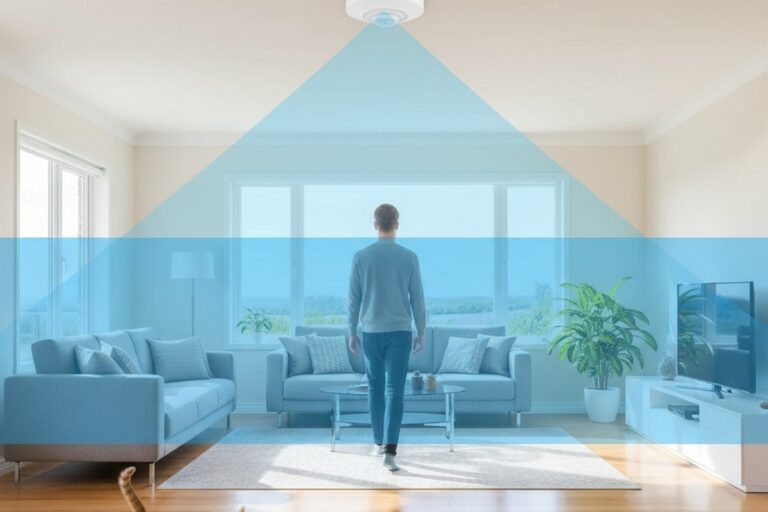
How Rayzeek Lens Design Solves the “Cat Problem” in Home Automation
Conventional motion sensors often fail in pet-friendly homes, triggering lights and wasting energy due to pets. Rayzeek solves this with a unique lens design featuring vertical cutoff, which elevates the sensor’s detection plane to ignore floor-level movement from cats and dogs while reliably detecting human occupants.
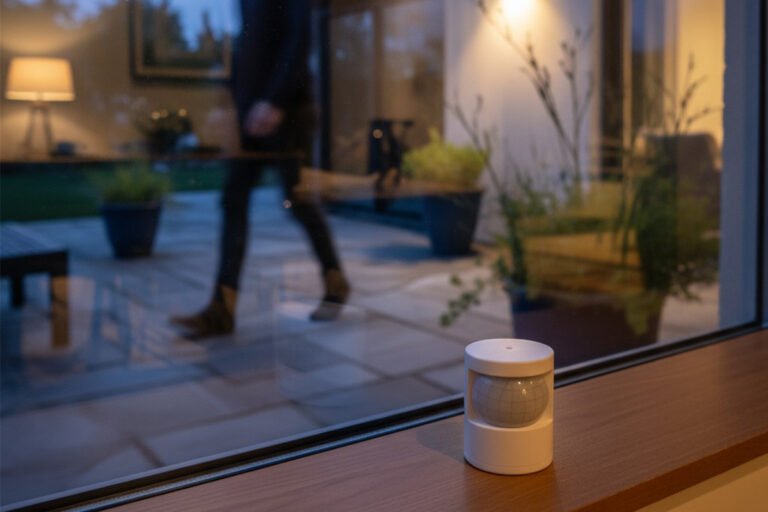
Why Your Motion Sensor Can’t See Through Glass
Ever wonder why a motion sensor fails to detect movement through a window? It’s not a defect; it’s physics. Most sensors rely on detecting infrared heat signatures, but standard glass is opaque to these wavelengths, effectively blinding the device. This guide explains why this happens and shows that the only reliable solution is mounting a weatherproof sensor outside for an unobstructed line of sight.

Motion Detection in High-Bay Garages and Workshops: Why Height Changes Everything
Motion sensors in high-bay garages and workshops often fail not because they are defective, but due to a fundamental geometry problem. As mounting height increases, the sensor’s detection cone narrows, leaving large areas uncovered. Simply increasing sensitivity backfires, leading to false triggers from HVAC systems or swaying equipment. The real solution involves strategic placement, correct lens selection, and multi-sensor zoning to ensure reliable coverage.
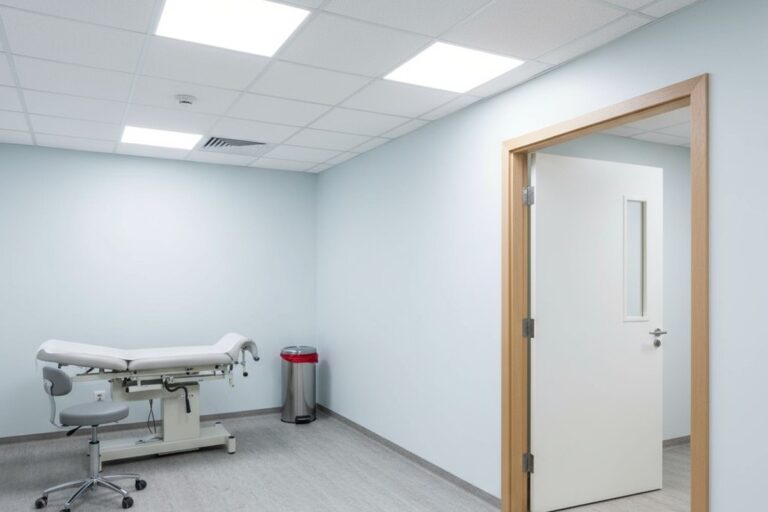
Privacy-Sensitive Clinics and Exam Rooms: Motion Control Without Awkward Moments
Standard motion sensors can create awkward, uncomfortable moments in clinics and exam rooms, eroding patient trust. To preserve patient dignity, lighting automation must be implemented with care, using principles like indirect line-of-sight placement, vacancy mode operation, and extended timeouts to ensure the environment feels safe and reliable.