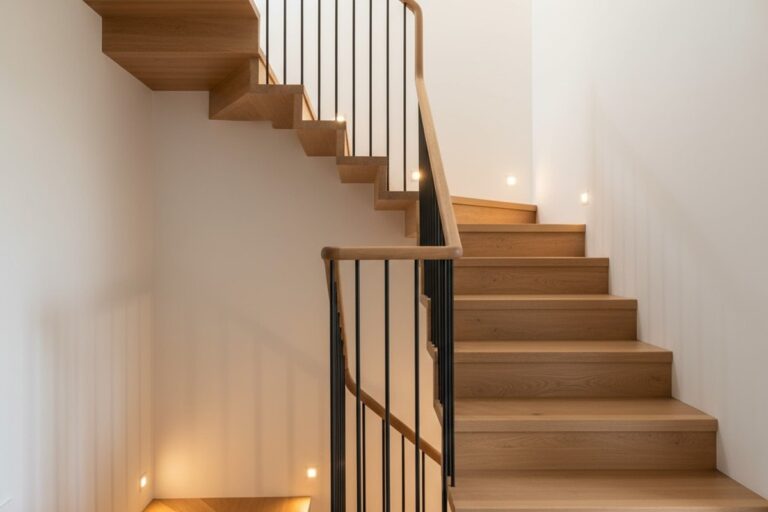
A low-angle view looking up an L-shaped staircase with light oak treads, a matching handrail, and thin black steel balusters against a clean, off-white wall.

3-Way Staircases, Solved: A Reliable Wiring Pattern for Rayzeek Sensors

Stop the frustrating ‘stair strobe’ effect. Standard 3-way switch wiring was not designed for smart sensors, which often results in flickering, unreliable lights. This guide details a reliable wiring pattern that establishes the motion sensor as the primary controller in the line-side box, ensuring smooth, consistent, and predictable staircase lighting.

Read More »

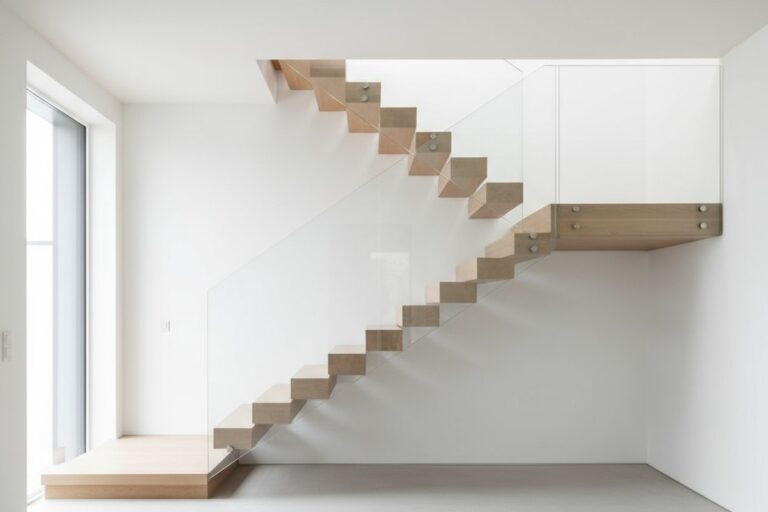
Split-Level Stair Landings: Solving the ‘Arrive From Either Side’ Problem

Automating lights on a split-level stair landing with a single motion sensor is a recipe for failure, creating dangerous blind spots. The definitive solution involves a paired-sensor architecture, dedicating one sensor to each approach, combined with intelligent settings like long timeouts and ambient light detection for a system that is safe, reliable, and seamlessly efficient.

Read More »
An empty, modern commercial corridor with a polished light gray concrete floor and off-white walls is evenly illuminated by long, recessed linear LED fixtures in the ceiling.

The End of Darkness: A Guide to Proactive Motion Lighting in Corridors

Many buildings suffer from ‘light lag’ in corridors, where motion-activated lights turn on too late, creating an unsettling user experience. Instead of simply increasing sensor sensitivity, which causes false triggers, the solution is to design an anticipatory system. By using a staggered sensor layout, strategic forward aiming, and intelligent pre-trigger logic, you can create a seamless experience where the path ahead is always illuminated, guiding users safely and efficiently.

Read More »

Aisle Lighting for Warehouses with Forklifts and Long Sightlines

Standard motion sensors are designed for open offices, not the long, narrow corridors of a warehouse. This fundamental mismatch creates daily frustrations and genuine safety hazards for workers and forklift operators, as sensors fail to detect head-on movement or are blocked by towering racks. Solving this requires a specific design approach that accounts for long sightlines, intersections, and equipment vibration to create a reliable system that supports workflow.

Read More »

The Right Tool for the Job: Stopping Nuisance Outdoor Lights in Shared-Driveway Townhomes

Constant false triggers from your outdoor motion light are a sign of a bad fit, not a bad sensor. In townhomes with shared driveways, wide-angle sensors are the wrong tool for the job. The solution isn’t complex automation, but choosing the right hardware: a narrow-beam sensor with a detection pattern that fits your property’s tight constraints. This guide shows how to select, mount, and aim the right sensor to eliminate nuisance alerts for good.

Read More »
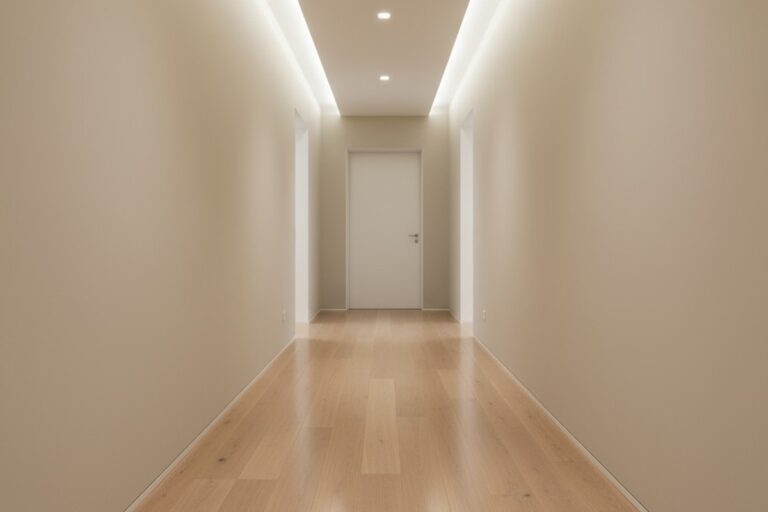
A straight-on view of a brightly lit, empty residential hallway with light beige walls, a polished light oak floor, and a closed white door at the far end.

Safer Hallways for Aging Parents: The Case for Instant-On Motion Lighting

A dark hallway is a major fall risk for aging parents, as even a few seconds of delay before a light turns on can lead to a catastrophic injury. The solution is an instant-on, motion-activated lighting system using PIR sensors, warm color temperatures, and appropriate brightness levels to eliminate this danger and ensure they never take a step in the dark.

Read More »
English