Aisle Lighting for Warehouses with Forklifts and Long Sightlines

Standard motion sensors are designed for open offices, not the long, narrow corridors of a warehouse. This fundamental mismatch creates daily frustrations and genuine safety hazards for workers and forklift operators, as sensors fail to detect head-on movement or are blocked by towering racks. Solving this requires a specific design approach that accounts for long sightlines, intersections, and equipment vibration to create a reliable system that supports workflow.

Read More »

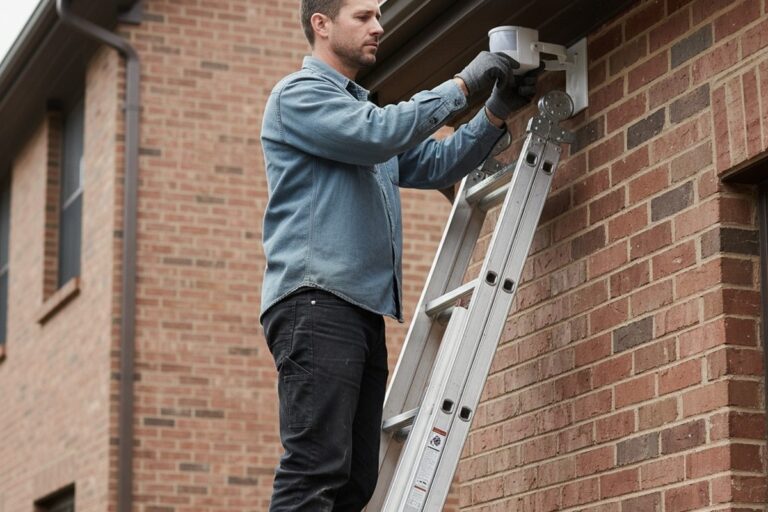
The Right Tool for the Job: Stopping Nuisance Outdoor Lights in Shared-Driveway Townhomes

Constant false triggers from your outdoor motion light are a sign of a bad fit, not a bad sensor. In townhomes with shared driveways, wide-angle sensors are the wrong tool for the job. The solution isn’t complex automation, but choosing the right hardware: a narrow-beam sensor with a detection pattern that fits your property’s tight constraints. This guide shows how to select, mount, and aim the right sensor to eliminate nuisance alerts for good.

Read More »
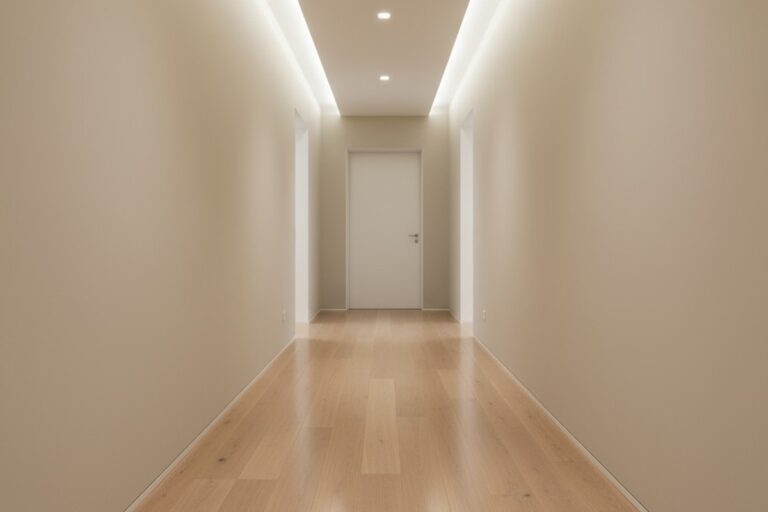
A straight-on view of a brightly lit, empty residential hallway with light beige walls, a polished light oak floor, and a closed white door at the far end.

Safer Hallways for Aging Parents: The Case for Instant-On Motion Lighting

A dark hallway is a major fall risk for aging parents, as even a few seconds of delay before a light turns on can lead to a catastrophic injury. The solution is an instant-on, motion-activated lighting system using PIR sensors, warm color temperatures, and appropriate brightness levels to eliminate this danger and ensure they never take a step in the dark.

Read More »
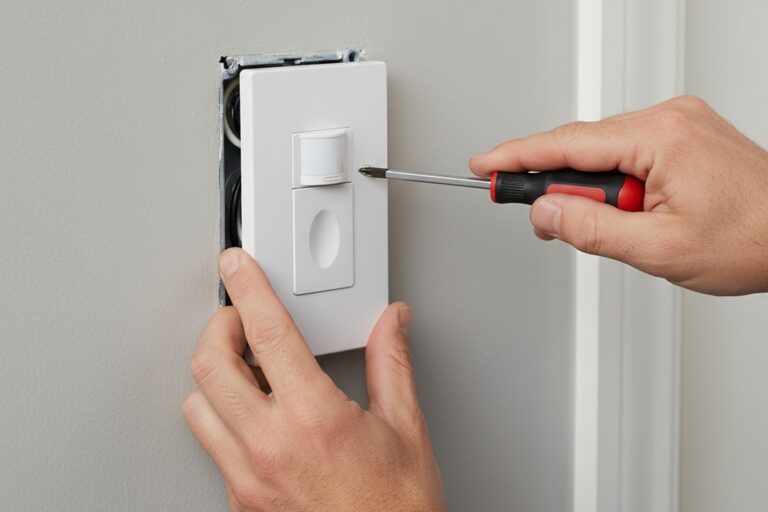
Close-up of an electrician's hands using a screwdriver to install a white occupancy sensor switch into an electrical box on a gray wall.

Stopping the Ghost-Running Bathroom Fan: Occupancy Sensing for Offices

A bathroom exhaust fan left running overnight in an empty office wastes energy and creates unnecessary noise. Manual switches fail due to a diffusion of responsibility. Occupancy sensors solve this by activating the fan only when the room is in use and running it for a set time afterward, ensuring proper ventilation without the constant waste.

Read More »
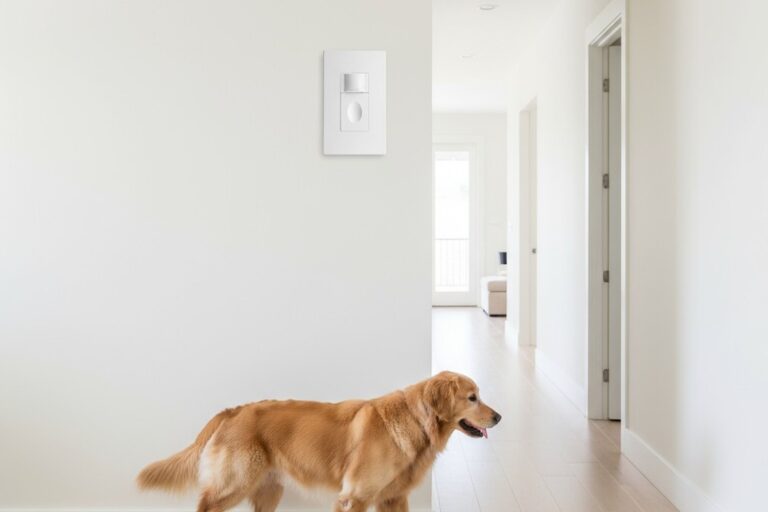
A white motion sensor is mounted high on a hallway wall, while a golden retriever walks calmly on the floor below it, undetected within the sensor's blind zone.

Cats, Dogs, and Curtains: Designing Motion Control That Ignores Pets but Responds to People

Stop letting your pets trigger your smart home’s motion sensors. Instead of disabling your automation, learn how to solve the problem with simple, mechanical adjustments. By strategically shaping the sensor’s field of view, choosing the correct mounting height, and tuning sensitivity, you can create a system that reliably detects people while completely ignoring cats and dogs, making your smart home truly intelligent.

Read More »
A man in a polo shirt and slacks holds a clipboard and looks up at a ceiling light fixture inside a small, modern office with a large window.

Small Business Energy Codes Without the Complexity: Stand-Alone Occupancy Control That Passes Inspections

Energy code compliance for lighting control doesn’t have to be complex or expensive for small businesses. This guide demystifies the requirements, showing how simple, stand-alone occupancy and vacancy sensors can satisfy inspectors without the need for networked building automation systems. Learn the room-by-room strategy to pass inspections easily and avoid costly rework.

Read More »
English