
A heavily blurred view of an artisan's workshop with soft, diffused lighting. Vague shapes of workbenches, shelves, and tools create an atmospheric, out-of-focus background.

Kilns, Torches, and Hot Glass: Taming Motion Sensors in the Artisan Studio

Motion sensors in artisan studios often mistake heat from kilns and torches for human movement, causing annoying false triggers. This is not a sensor fault but a mismatch with the environment. To solve this, you can use strategic placement to avoid thermal zones, mask parts of the sensor lens to create blind spots, and adjust settings for lower sensitivity and longer timeouts. For extreme cases, alternative technologies like microwave or dual-tech sensors offer a more robust solution.

Read More »

The Silent Sabotage: How to Light Black Box Theaters Without Ruining the Show

Standard motion sensors often sabotage black box theater performances by triggering lights at the worst possible moments. To maintain artistic integrity and energy efficiency, theaters should adopt intelligent lighting control, favoring manual-on vacancy sensors with long timeouts and strategic placement to ensure the show is never compromised by aggressive automation.

Read More »
A close-up view shows fingertips applying a small piece of black electrical tape to a specific segment of a motion sensor's Fresnel lens.

Taming the Glass-Door Pantry: A Guide to Precision Motion Sensing

Tired of your glass-door pantry light flashing every time someone walks by? This isn’t a sensor flaw, but a common installation mistake. The solution lies in strategic placement. By positioning a Rayzeek motion sensor in an inside corner and angling it away from the doorway, you can create a detection zone contained entirely within the pantry, eliminating false triggers from hallway traffic for good.

Read More »
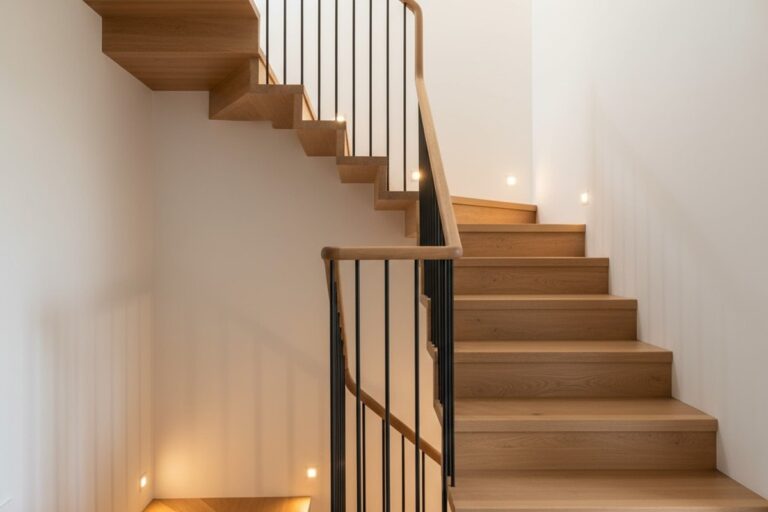
A low-angle view looking up an L-shaped staircase with light oak treads, a matching handrail, and thin black steel balusters against a clean, off-white wall.

3-Way Staircases, Solved: A Reliable Wiring Pattern for Rayzeek Sensors

Stop the frustrating ‘stair strobe’ effect. Standard 3-way switch wiring was not designed for smart sensors, which often results in flickering, unreliable lights. This guide details a reliable wiring pattern that establishes the motion sensor as the primary controller in the line-side box, ensuring smooth, consistent, and predictable staircase lighting.

Read More »

Split-Level Stair Landings: Solving the ‘Arrive From Either Side’ Problem

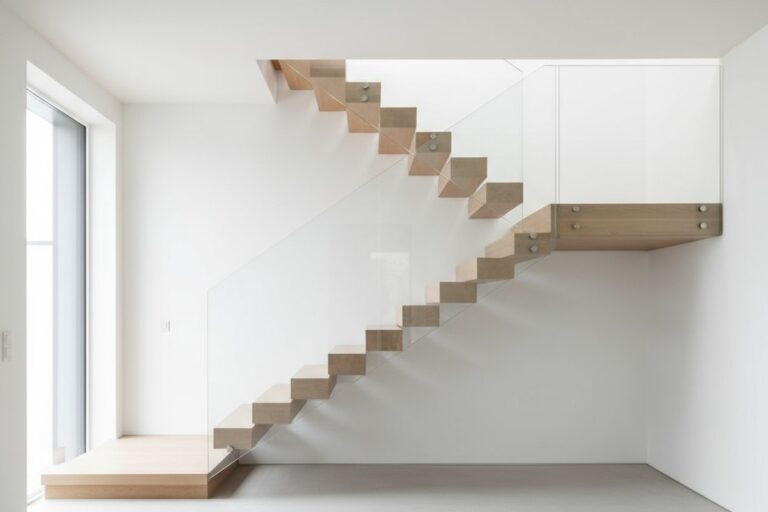
Automating lights on a split-level stair landing with a single motion sensor is a recipe for failure, creating dangerous blind spots. The definitive solution involves a paired-sensor architecture, dedicating one sensor to each approach, combined with intelligent settings like long timeouts and ambient light detection for a system that is safe, reliable, and seamlessly efficient.

Read More »
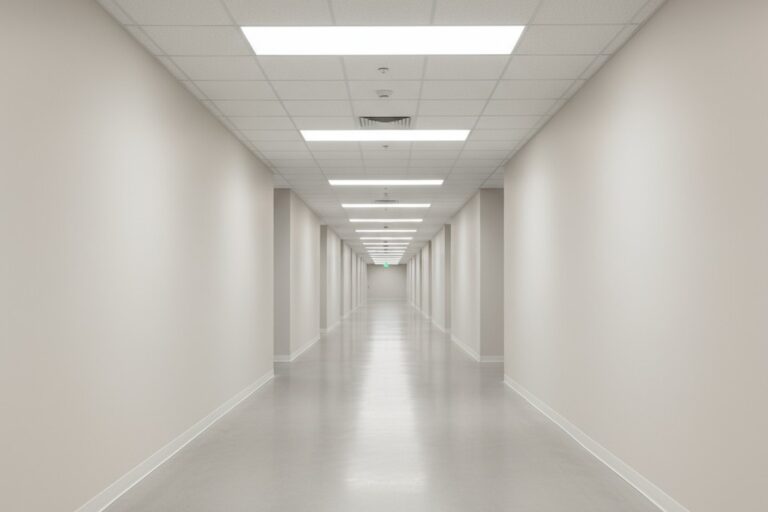
An empty, modern commercial corridor with a polished light gray concrete floor and off-white walls is evenly illuminated by long, recessed linear LED fixtures in the ceiling.

The End of Darkness: A Guide to Proactive Motion Lighting in Corridors

Many buildings suffer from ‘light lag’ in corridors, where motion-activated lights turn on too late, creating an unsettling user experience. Instead of simply increasing sensor sensitivity, which causes false triggers, the solution is to design an anticipatory system. By using a staggered sensor layout, strategic forward aiming, and intelligent pre-trigger logic, you can create a seamless experience where the path ahead is always illuminated, guiding users safely and efficiently.

Read More »
English