
A long, empty hotel corridor stretches into the distance, brightly illuminated by recessed circular lights in the ceiling.

Turning a Midscale Hotel Green with Rayzeek Occupancy Control

Midscale hotels can significantly reduce energy waste from lighting and HVAC in unoccupied corridors, back-of-house areas, and guest rooms by deploying stand-alone occupancy sensors. This practical guide outlines a phased, low-risk approach to implementation, focusing on autonomous control that delivers immediate savings without the complexity of networked systems, ensuring a rapid return on investment and a seamless guest experience.


Read More »
A low-angle view down a long, empty office corridor with glass-walled rooms on one side and a polished concrete floor reflecting the ceiling lights.

PIR Sensors Are Enough for Most Rooms

While dual-technology sensors are often the default choice for occupancy detection, this is a costly misconception for most applications. In spaces like offices, homes, and retail stores, a properly tuned passive infrared (PIR) sensor provides more reliable performance with fewer false trips and a lower total cost, making it the superior choice for all but the most specialized environments.

Read More »

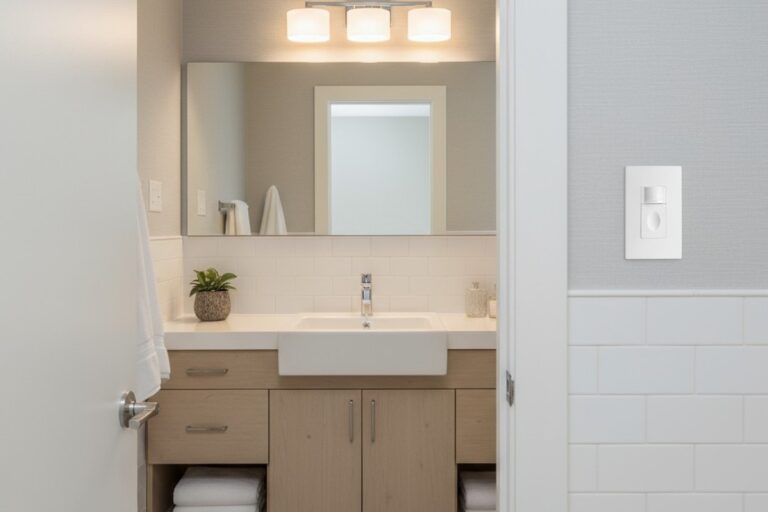
How to Add a Motion Sensor Light Without Messing Up Your Bathroom Fan Timer

Adding a motion sensor light to a bathroom with a fan timer can create conflicting automation goals. Wiring them to the same control is a common mistake that leads to unreliable performance. The correct solution is to wire them independently, allowing the motion sensor to control only the light and the timer to control only the fan. This ensures both systems operate predictably without interfering with each other, preserving the fan’s purge cycle and the light’s energy-saving function.

Read More »

Motion Sensing in Cold Rooms and Walk-In Freezers

Standard passive infrared (PIR) motion sensors often fail in cold rooms and walk-in freezers due to low thermal contrast and environmental interference. To ensure safety and energy efficiency, facilities must use specialized technologies like dual-technology sensors, combined with strategic mounting and configuration, to achieve reliable performance in these hostile environments.

Read More »
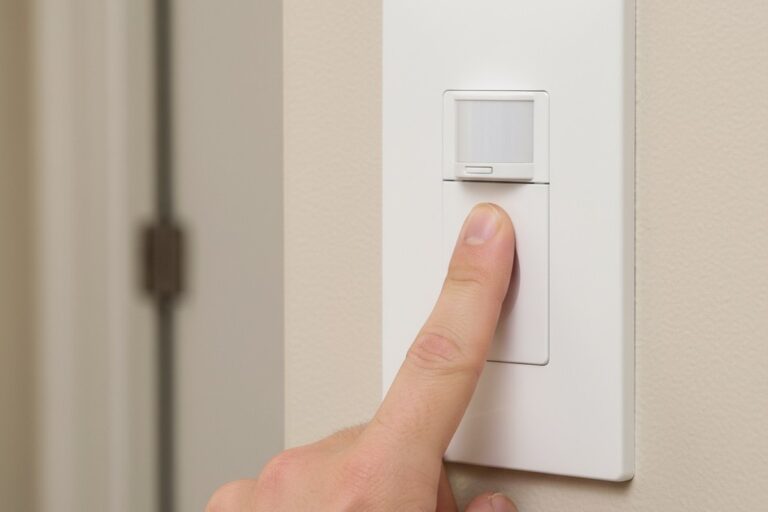
A close-up shot shows an adult's hand pressing the large paddle of a white motion sensor light switch mounted on a textured wall.

Why Rayzeek Vacancy Mode Is the Secret Weapon for Toddler Families

Standard motion sensors often disrupt toddler sleep with harsh, automatic light. Rayzeek’s vacancy mode solves this by requiring manual activation, putting parents in control of when lights turn on, while still automating the shutoff. This simple change protects a child’s sleep by allowing for gentle, intentional illumination during nighttime awakenings.

Read More »
A minimalist white split air conditioner unit is mounted high on a light gray wall in a brightly lit, modern room.

Installing the Rayzeek AC Motion Controller on a Split AC Without Drama

Installing the Rayzeek AC motion controller is a straightforward way to save on energy costs in an apartment. This guide explains the critical choice between a low-voltage installation, which is ideal for renters and protects your warranty, and a line-level installation, which requires a professional. Learn how to make the right choice for a safe, reversible, and drama-free setup.

Read More »
Rows of high school students sit at their desks in a modern, well-lit classroom, focused on writing their exams.

A Practical Classroom Playbook for Rayzeek Ceiling Sensors

Generic lighting automation often fails in educational settings, causing disruptions during exams and lectures. The key to successful, energy-efficient classroom lighting isn’t just installing sensors, but precisely configuring them. This guide provides a practical playbook for calibrating Rayzeek ceiling sensors for coverage, timeout duration, and activation modes to meet the specific demands of teaching and learning.

Read More »

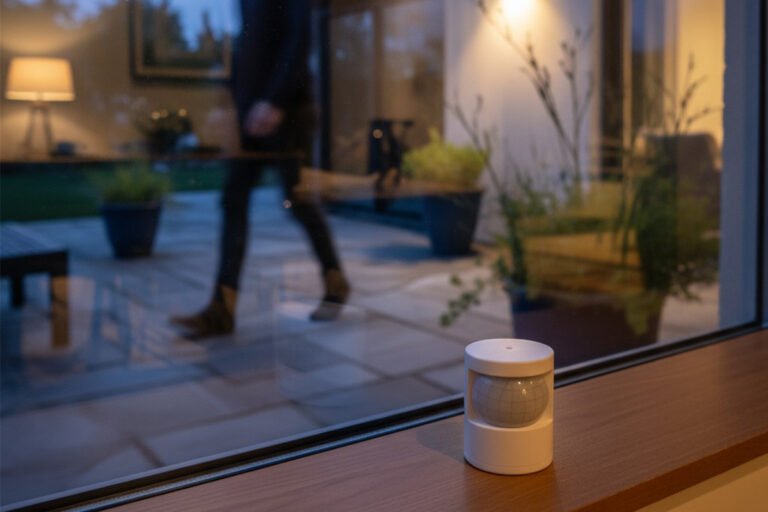
Why Your Motion Sensor Can’t See Through Glass

Ever wonder why a motion sensor fails to detect movement through a window? It’s not a defect; it’s physics. Most sensors rely on detecting infrared heat signatures, but standard glass is opaque to these wavelengths, effectively blinding the device. This guide explains why this happens and shows that the only reliable solution is mounting a weatherproof sensor outside for an unobstructed line of sight.

Read More »
English